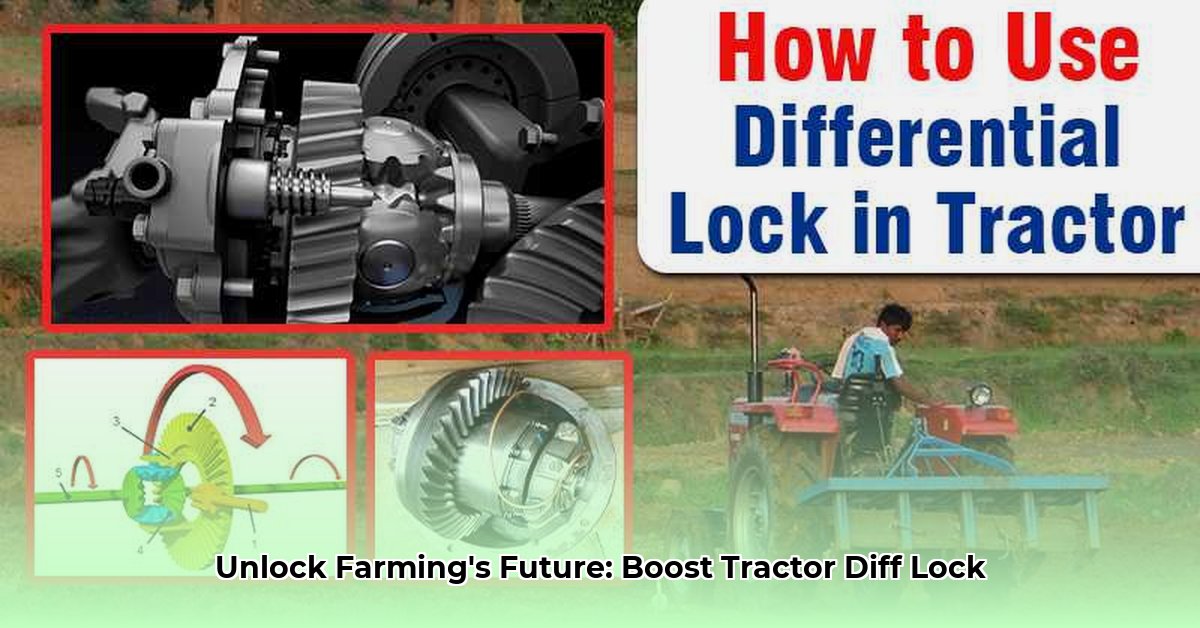
Tractor Diff Lock: Your Key to Sustainable Farming Efficiency
Let's talk about a critical tractor feature often overlooked: the differential lock (diff lock). Think of it as your tractor's secret weapon for conquering challenging terrain. Have you ever been stuck in mud, watching one wheel spin uselessly while the other remains stationary? That's where the diff lock proves invaluable! For more tractor troubleshooting tips, see this helpful guide: Tractor Troubleshooting.
It all comes down to power distribution. Without a diff lock, your tractor's wheels can rotate at different speeds—ideal for smooth turns. However, in difficult conditions like deep mud, heavy snow, or steep inclines, one wheel might lose traction, wasting power and leaving you stranded. The diff lock solves this. It forces both wheels to turn at the same speed, evenly distributing power and dramatically improving grip.
How Does it Work?
Imagine your tractor's wheels as two separate paths. The differential allows them to travel independently. When you engage the diff lock, you force both wheels to follow the identical path, regardless of traction differences. This ensures both rear wheels receive equal power, significantly reducing wheel slippage and maximizing pulling power.
What are the Options? Choosing the Right Diff Lock System
You have two primary choices: manual and automatic diff locks. With a manual lock, you control engagement and disengagement using a lever or switch. This offers precise control but requires awareness of your surroundings and remembering to disengage it when turning on paved surfaces to prevent damage. An automatic system senses when extra traction is needed and engages itself. While convenient, you rely on the system's ability to correctly detect slippery conditions.
Here's a comparison:
| Feature | Manual Lock | Automatic Lock |
|---|---|---|
| Control | Driver controlled; engage/disengage as needed. | System-controlled; less driver input. |
| Maintenance | Regular checks recommended; potential for misuse. | Less frequent maintenance; system may require servicing. |
| Cost | Typically less expensive upfront. | Usually more expensive to purchase and install. |
| Complexity | Simple to understand and use. | More complex; potential for malfunctions. |
| Tire Wear | Increased wear if misused. | Potentially lower wear if the system functions correctly. |
When to Use Your Diff Lock: Mastering Traction
Engage your diff lock when anticipating slippage—deep mud, heavy snow, or steep slopes. However, disengage it when turning on hard surfaces to prevent wear and tear on your tractor's drivetrain. Overuse can lead to increased wear and potential damage, especially in automatic systems. Always consult your owner's manual.
Maintaining Your Diff Lock: Preventative Maintenance
Regular maintenance is crucial for longevity. Just as you wouldn't neglect your engine, pay attention to your diff lock. Check for leaks, listen for unusual noises, and ensure smooth engagement. Addressing small issues early prevents major problems. A little preventative maintenance saves you time and money.
Diff Locks and Sustainable Farming
Efficient diff lock use translates to more sustainable and cost-effective farming. Improved traction means less fuel consumption, saving money and reducing your carbon footprint. This contributes to environmentally responsible agricultural practices.
Who Benefits? Stakeholder Impact
- Farmers: Increased productivity, lower fuel costs, and reduced downtime.
- Manufacturers: Drives innovation in tractor design and engineering.
- Environment: Reduced fuel consumption leads to less pollution, promoting sustainable agriculture.
This guide equips you to use your tractor's diff lock efficiently and safely. Remember proper training and safe operating practices are crucial. Always consult your tractor's manual.
How to Improve Tractor Traction on Hilly Terrain Using Differential Locks
Key Takeaways:
- Differential locks enhance traction, particularly on inclines, but aren't a standalone solution.
- Prioritize engaging 4WD before using the differential lock.
- Engage at low speeds to avoid damage.
- Understanding your tractor's capabilities is essential.
- Proper maintenance minimizes wear and tear.
- Strategic brake use aids control on slopes.
Understanding Your Tractor's Differential
Tractor differentials usually allow the wheels on an axle to rotate at different speeds, necessary for turning. But when one wheel loses traction on a slope, the differential lock steps in. It forces both wheels on an axle to rotate at the same speed, enhancing traction in challenging situations.
How to Use a Differential Lock Effectively
Improving tractor traction on hilly terrain using differential locks requires a methodical approach. Here's a step-by-step guide:
- Assess the Terrain: Evaluate the slope's conditions before proceeding.
- Engage 4WD: Engage four-wheel drive (4WD) before using the differential lock for better overall traction.
- Reduce Speed: Significantly reduce speed before tackling the incline to minimize drivetrain stress.
- Engage the Differential Lock: Carefully engage the differential lock after slowing down and engaging 4WD.
- Maintain Control: Use brakes and steering gently, avoiding jerky movements.
- Disengage the Differential Lock: Disengage the diff lock once the challenging section is passed.
Pros and Cons of Using Differential Locks
| Feature | Pros | Cons |
|---|---|---|
| Traction | Significantly improves traction in challenging conditions, especially on hills. | Can lead to increased tire wear if used excessively or improperly. |
| Maneuverability | Enables control even when one wheel loses traction. | Reduces maneuverability when engaged; turning becomes more difficult. |
| Maintenance | Relatively simple maintenance. | Excessive use leads to increased wear and potential damage to components. |
Alternative Traction Enhancing Techniques
Raising implements reduces wheel load. Strategic brake use (brake-assisted steering) helps manage traction and maneuverability on hills, often reducing wear on components.
Minimizing Wear and Tear
Regular maintenance, including lubrication and inspections, is vital for extending the lifespan of your tractor's differential lock and drivetrain. Prevention is significantly cheaper than repair.